
The Daley Brief — November 2, 2026
ELECTION EVE: A DEAD HEAT IN L.A., A SHOCK SWITCH IN MICHIGAN AND A NATION ON THE EDGE
L.A.’s mayoral race is tied, Michigan’s Senate contest takes a surprising turn, early voting surges and three California propositions could collide.
 Dear Friends,
Last week, we promised you the politics. This week, we deliver — and the timing could not be better.
With Election Day closing in tomorrow, the closing headlines are coming fast. Los Angeles has a mayoral contest tied in a major poll. California voters face ballot measures with consequences that may depend on how other measures fare. A Democratic congresswoman has endorsed the Republican nominee in a pivotal Michigan Senate race. And millions of Americans have already voted.
The stakes extend well beyond the candidates. Voters will decide who leads cities and states, the balance of power in Congress, and the policy environment for the work our clients and communities care about most: housing, affordability, public safety, infrastructure, economic opportunity and the ability of government to deliver.
Make no mistake: this is one of the most consequential elections in a generation, and the world is watching. Control of Congress hangs in the balance. The nation’s largest state will choose a new governor. The country’s second-largest city may decide whether to keep its sitting mayor. Allies and adversaries alike are waiting to see which direction America chooses — and the decisions made this week will shape the country long after the last ballot is counted.
We have pulled together the developments that caught our attention — what the numbers say, what they do not say, and the decisions that will matter long after the campaign signs come down.
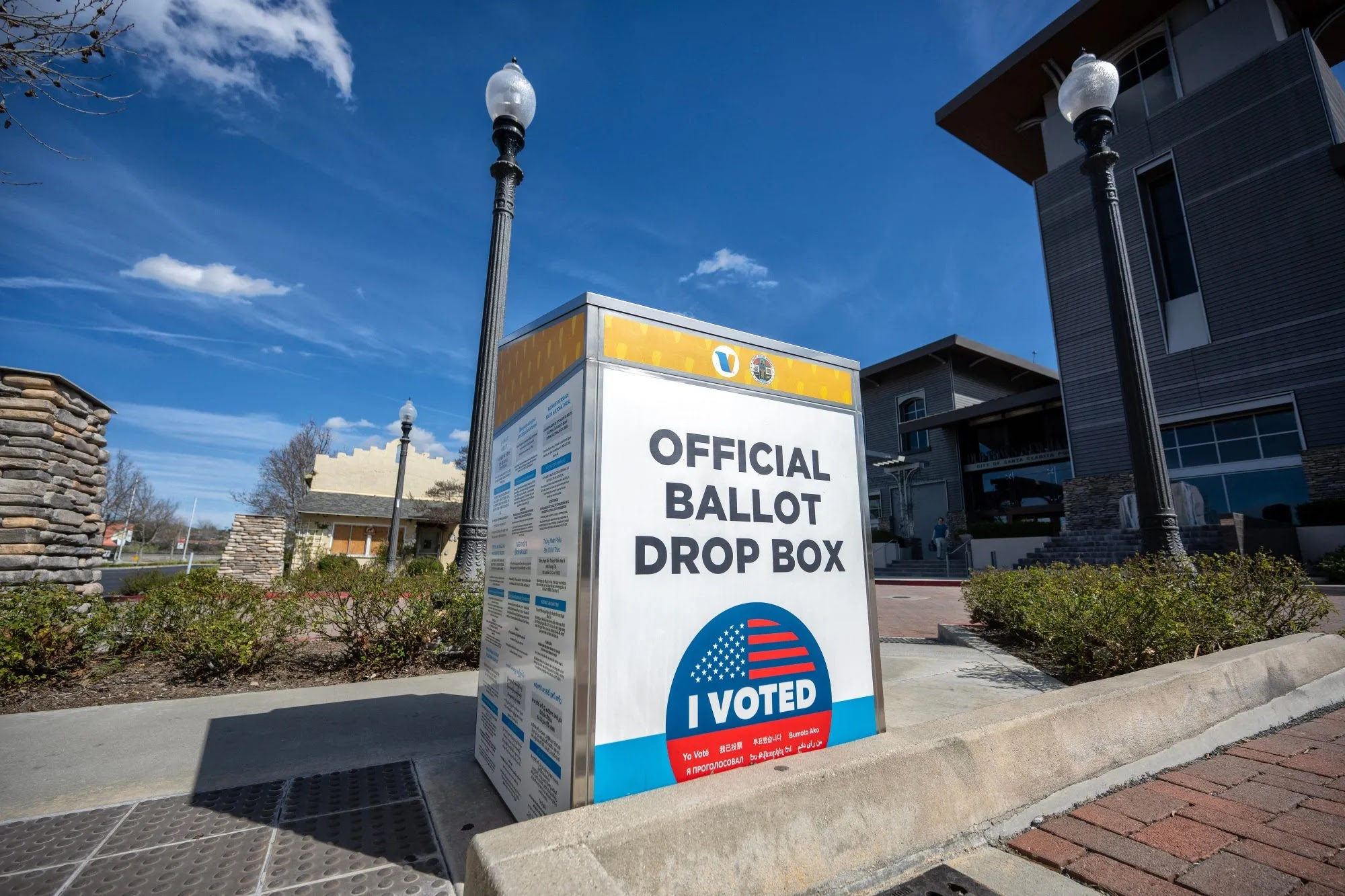
But first, the most important thing you can do this week: get out and vote. If you have not cast your ballot yet, make a plan to vote tomorrow— and bring a friend, a neighbor or a coworker with you. In races this close, every vote matters.
Let’s get into it.
FROM THE CAMPAIGN TRAIL
Los Angeles Mayor: A Dead Heat — and a Turnout Story Beneath the Polls
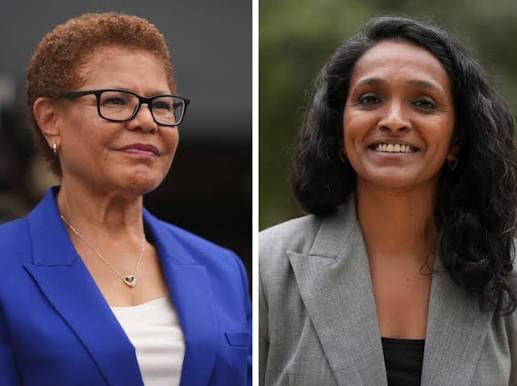
The latest Berkeley IGS/Los Angeles Times survey puts Mayor Karen Bass and Councilmember Nithya Raman at 40% each among likely voters, with 19% undecided. In September, the same poll had Raman ahead 39% to 28%. That is a striking change in five weeks — but a tie in one survey is not an election result.
The race has turned on questions that go beyond party, since both candidates are Democrats: the Palisades fire response, policing, homelessness, housing costs, neighborhood services and confidence in City Hall. Bass is emphasizing her governing record and public-safety message. Raman is arguing for a different approach to housing, infrastructure and city management. Their once-friendly political relationship has become an increasingly confrontational contest.
The late-breaking issue for Raman has been her evolving public statements about whether and when she would replace LAPD Chief Jim McDonnell. Meanwhile, the campaigns have continued to compete for voters who backed Spencer Pratt in June, and the Republican Central Committee of L.A. County was recently revealed to be spending over $100,000 opposing Councilmember Raman. The Los Angeles Times’ final-week reporting shows why both issues have become central.
Endorsements have drawn sharp lines, too. County Supervisor Lindsey Horvath has gone all in for Raman, endorsing her at an October 20 news conference in Grand Park. She is the only member of the Board of Supervisors backing Raman; her four colleagues have endorsed Bass.
The turnout wrinkle: In an October 29 analysis, The Basin found that the two West Valley council districts where Pratt had run strongest had already returned ballots equal to 34% of their June turnout. Raman’s three strongest districts stood at roughly 26%–27%, and Bass’s strongest South L.A. districts were also below the citywide comparison of about 30%. These are returns through October 28 — not a count of support for either mayoral candidate.
Age is another part of the story. Voters 65 and older accounted for 47% of ballots returned in the city snapshot despite receiving 23% of ballots mailed; voters ages 18–34 accounted for 12% of returns despite receiving 30% of ballots mailed. That is a useful reminder that who votes, and when, matters just as much as who tells a pollster they intend to vote.
For all the drama in the polls, this race has struggled to excite voters. Many Angelenos are frustrated with City Hall but unenthusiastic about their choices, and that lack of energy shows up in the ballot returns. It also puts young voters at the center of the outcome: if they get out and vote, Bass has a major problem. If they do not, Bass is likely fine.
A caution for election night: If the initial margin is close, do not assume the first posted total will hold. In both the 2022 mayoral contest and this year’s June primary, later-counted Los Angeles ballots changed the apparent standing of candidates. Younger, more progressive voters have tended to return ballots later, while older voters are disproportionately represented among early returns. That pattern could help Raman as additional ballots are counted, especially if her younger supporters turn out on Election Day — but it is a possibility, not a guarantee. The Los Angeles Times reported on this pattern after the June primary.
As veteran L.A. political observer Jon Regardie argued in Los Angeles Magazine last week, the broader story is voter frustration with city performance — including fire recovery, homelessness and the responsiveness of government. That dissatisfaction helps explain the intense competition for voters who wanted an alternative in June.
OUR TAKE: A Close Election Is Not a Substitute for a Governing Plan
Los Angeles is confronting real challenges: deteriorating infrastructure, neighborhood conditions, housing affordability, homelessness, public safety, a difficult business climate and city systems that often seem harder to navigate than they should be. These issues will not disappear because one campaign delivers a better closing argument.
The questions for both candidates are practical: What will be different in the first 100 days? Who will be responsible? What can be accomplished with existing resources? How will departments be held accountable? And how will residents and businesses know whether services are actually improving?
The election will determine who leads City Hall. The harder assignment comes afterward: translating a political mandate into a government that is more coordinated, responsive and effective. That is the standard by which either administration should be judged.
 BEYOND LOS ANGELES: SIX CALIFORNIA RACES TO WATCH
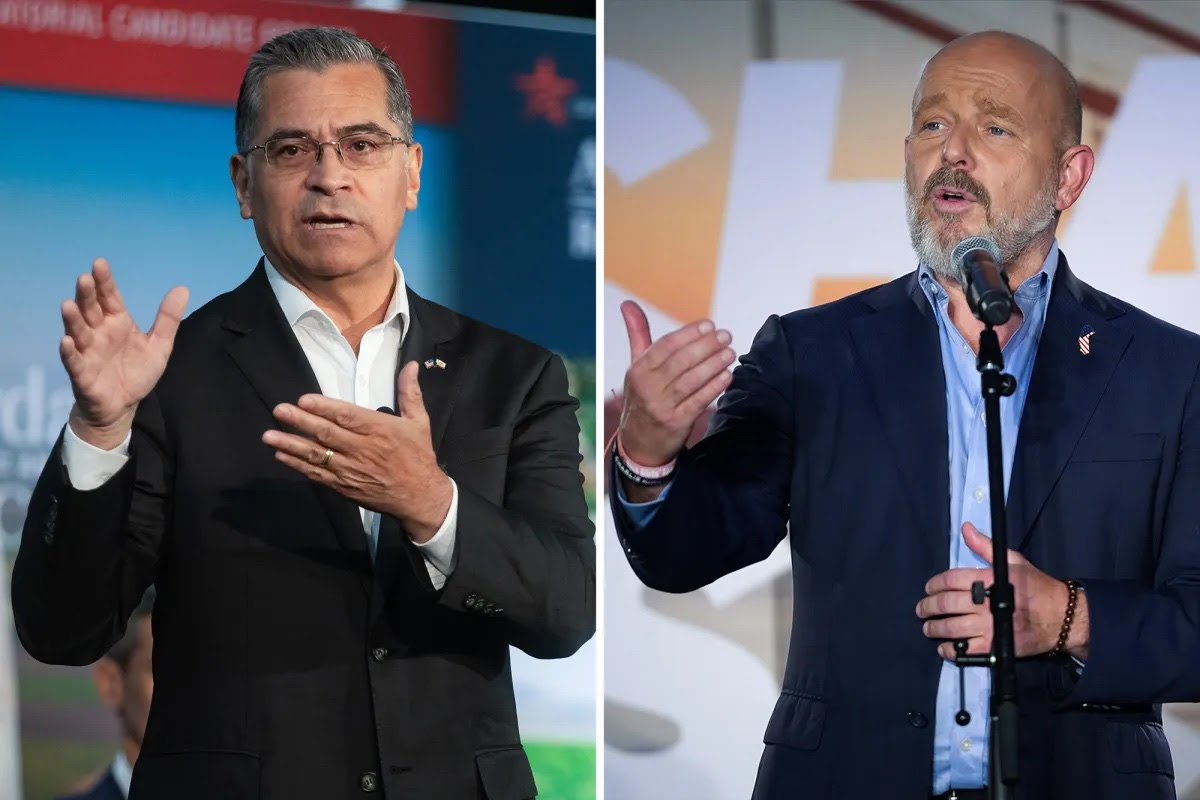
Governor: Xavier Becerra vs. Steve Hilton — The Next Administration Takes Shape
The October 30 Berkeley IGS/Los Angeles Times poll showed former U.S. Health and Human Services Secretary and California Attorney General Xavier Becerra at 61%, Republican Steve Hilton at 34%, with 5% undecided. A separate PPIC survey earlier in the final stretch measured 61% to 37%. Those are polling snapshots, not final results.
Hilton has made affordability, business conditions and the costs of state government central to his campaign, while Becerra has emphasized his governing experience, housing development and opposition to Trump administration policies. The policy question after the election will be how the next governor addresses housing, insurance, homelessness, energy and the state budget — and how Sacramento works with Washington.
Congress, District 48: Marni von Wilpert vs. Jim Desmond — A New Map, a New Constituency
The newly redrawn 48th District now includes Palm Springs and Indian Wells along with communities in Riverside and San Diego counties. Democratic San Diego Councilmember Marni von Wilpert faces Republican San Diego County Supervisor Jim Desmond for the open seat. A SurveyUSA poll in early October found von Wilpert at 47% and Desmond at 38%; a subsequent Desmond-sponsored poll showed 47% to 44%, inside its margin of error.
The campaign has focused on affordability, immigration, taxes and federal spending. For the Coachella Valley, the next representative will also matter on aviation, transportation, water, tourism, infrastructure and federal partnerships. The redrawn district’s different communities and voting patterns make turnout particularly worth watching.
Congress, District 11: Scott Wiener vs. Connie Chan — Who Succeeds Nancy Pelosi?
State Sen. Scott Wiener and Supervisor Connie Chan are competing to succeed former Speaker Nancy Pelosi. A USC survey reported in late October showed Wiener at 47%, Chan at 41% and 9% undecided, with a margin of error large enough to warrant caution about the difference. Pelosi has endorsed Chan, while Wiener has his own coalition of supporters, including the California Democratic Party.
Pelosi has done far more than endorse. She has put everything behind Chan — hosting a fundraiser, lending her communications director to the campaign and working the phones for endorsements. That has thrown off many San Franciscans who greatly respect Wiener, and many are surprised that Pelosi has staked her name on this race just as she leaves office. Win or lose, the result will be read as a verdict on her influence at home.
The underlying political question is about what kind of coalition will define the city’s next chapter in Washington — one rooted in familiar political alliances or a different combination of constituencies, priorities and leadership styles.
Central Valley, District 22: David Valadao vs. Randy Villegas
Republican Rep. David Valadao faces Democrat Randy Villegas in an agricultural district where pocketbook issues, immigration, health care and federal programs have particular resonance. Valadao has repeatedly won highly competitive races, while Villegas is emphasizing affordability and accountability. Polling is limited, and some public data have come from campaigns; turnout and the district’s large Latino electorate are worth monitoring without assuming that demographic patterns determine votes.
Orange County, District 45: Derek Tran vs. Chuong Vo
Democratic Rep. Derek Tran, who narrowly defeated Michelle Steel in 2024, is seeking a second term against Republican former Cerritos councilmember Chuong Vo in western Orange County. The redrawn district is somewhat more Democratic than its predecessor, and Inside Elections shifted its rating to Solid Democratic on October 29. There is little publicly available head-to-head polling; the race remains a useful measure of Orange County’s suburban coalitions and how the new congressional lines perform.
Sacramento Area, District 6: Richard Pan vs. Kevin Kiley
Former state Sen. and pediatrician Richard Pan (D) faces Rep. Kevin Kiley, who is running with no party preference after previously serving as a Republican. California’s redrawn map shifted the district’s political composition. A USC survey conducted October 22–28 measured Pan at 55% and Kiley at 43% among 439 likely voters. The contest puts redistricting, public health and the appeal of an independent ballot label in the spotlight.
READ THE FINE PRINT: CALIFORNIA BALLOT MEASURES
California voters are deciding 14 statewide propositions. Three of them are connected in a way the ballot labels do not fully explain.
Props. 40, 41 and 42: Three Measures, One Legal Collision
Prop. 40 would impose a one-time 5% wealth tax on qualifying California billionaires, with most proceeds dedicated to health-related programs. The Legislative Analyst’s Office estimates tens of billions of dollars in temporary revenue, while emphasizing uncertainty about the amount and effects.
Prop. 41 would require audits of programs funded by new state special taxes and would prohibit new state taxes from excluding revenues from California’s existing constitutional spending limit. Prop. 42 would prohibit new state taxes on ownership of personal property, including financial assets, and restrict certain retroactive taxes.
The consequential detail: If Prop. 40 and one of the other measures both pass, and Prop. 41 or 42 receives more “yes” votes, the provisions could conflict and Prop. 40 could be prevented from taking effect. Whether and to what extent that happens may require a court to resolve the conflict. The official state voter guide and LAO analysis explain the interaction.
In late-October polling, support for the billionaire tax had weakened: PPIC measured Prop. 40 at 46% yes and 52% no, while a Berkeley IGS/Times survey measured 42% yes and 50% no. These differing polls are another reason to distinguish campaign narratives from the final certified count.
Prop. 43: The Local Tax Measure Opposed by Its Own Legislative Author
Prop. 43 would raise the approval threshold for certain citizen-initiated local special taxes from a simple majority to two-thirds beginning in 2027. Assemblymember Buffy Wicks wrote the compromise language that put it on the ballot to head off a broader measure, but now opposes Prop. 43 itself. For cities, counties and service providers, this is not just a tax debate; it changes the potential path for locally proposed funding. Official ballot explanation.
Prop. 39: Identification Requirements — and Voter-Roll Verification
Prop. 39 would establish new voter-identification requirements for in-person and mail voting, and require verification of the citizenship of registered voters. Its supporters argue the changes would improve election security; opponents raise concerns about access, administration and voters who lack readily available identification. The latest surveys show support has declined over the campaign.
THE NATIONAL SPOTLIGHT
Michigan Senate: A Surprise Endorsement 48 Hours Before the Vote
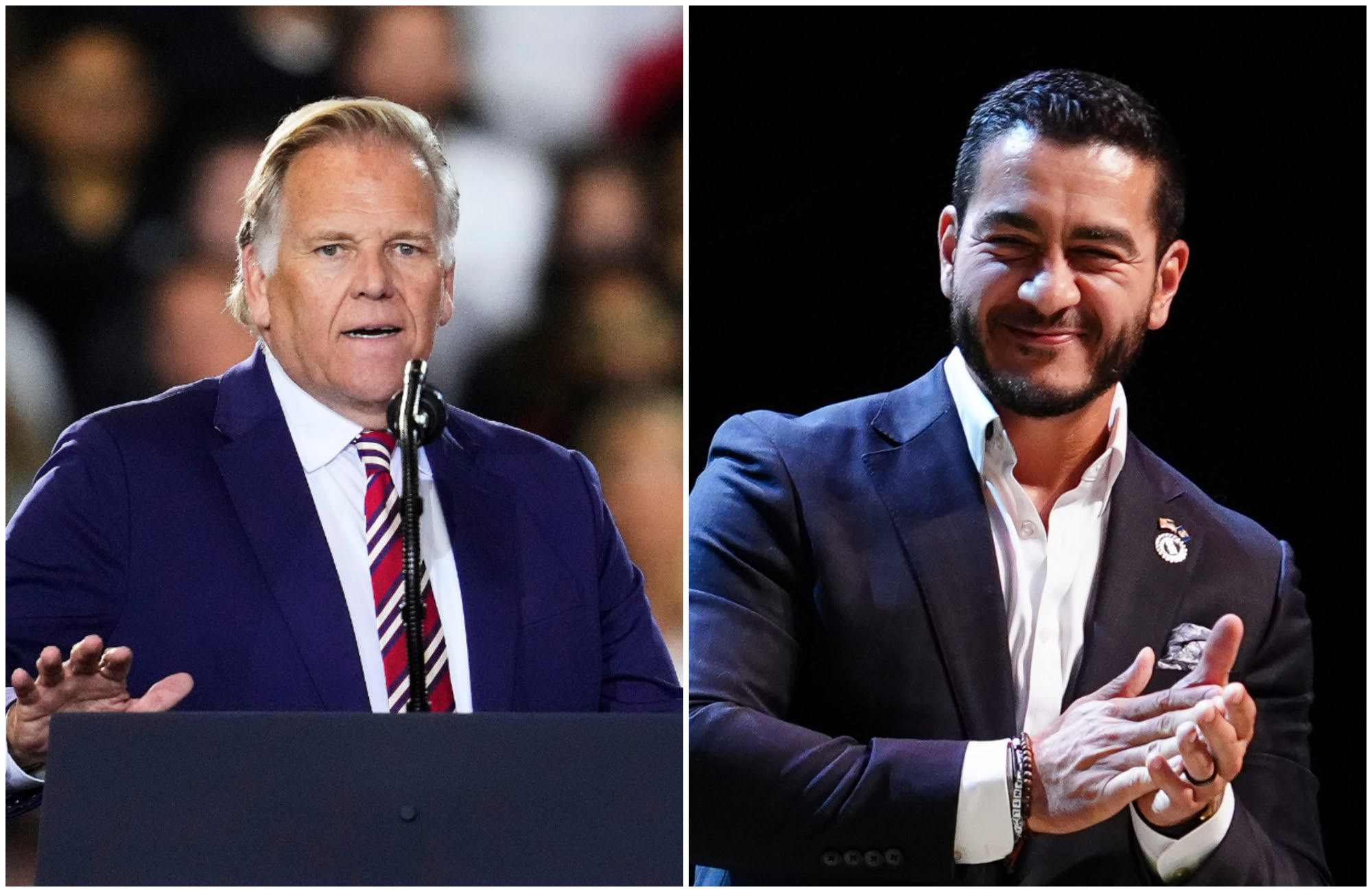
In one of the final weekend’s most unexpected developments, Democratic Rep. Haley Stevens — who lost the Michigan Senate primary to Abdul El-Sayed — publicly endorsed Republican Mike Rogers on November 1 in the race to replace retiring Democratic Sen. Gary Peters. Stevens had previously pledged to support El-Sayed.
The reversal followed a dispute over campaign advertising and whether Stevens would join an El-Sayed unity event. She appeared with Rogers at a Detroit church; Democratic leaders including Chuck Schumer, Nancy Pelosi, and Michigan Representative Debbie Dingell strongly criticized the decision, and members of her staff resigned. Stevens was swiftly expelled from the Michigan Democratic Party, and it remains to be seen whether Democratic Leader Hakeem Jeffries will expel her from the House Democratic Caucus for the last two months of her term. Regardless of the results on Tuesday, Haley Stevens’ career as a Democratic figure will likely be over for the time being. Her political move is a far cry from her early years as a much lauded young lawmaker and former Obama Administration alumni, who now has Democratic across the county lawmakers whispering “Et tu, Haley?”.
El-Sayed responded that he was focused on voters’ economic concerns.
Why it matters: Michigan illustrates the tension between party unity and competing factions within a party. It also makes the closing stretch less predictable politically — while offering no reliable way to infer the actual effect on vote totals until ballots are counted. Many Democratic party figures in Michigan are playing down the significance of Stevens’ last minute endorsement switch, as many voters have already cast their ballots.
Obama’s Return: A Familiar Messenger in a New Democratic Party
Former President Barack Obama has returned to the campaign trail in the closing stretch, appearing with Democrats in Ohio, Michigan and Georgia. His rallies have included former Ohio Sen. Sherrod Brown, Michigan Senate nominee Abdul El-Sayed, Georgia Sen. Jon Ossoff and other statewide candidates. Reporting from his recent appearances has highlighted the crowds, humor and direct criticism of President Trump.
Nearly a decade after leaving the White House, Obama remains a prominent national voice with the ability to draw attention across different generations of Democratic voters. At the same time, the candidates appearing with him reflect a party still debating its direction: economic populism, ideological identity, governing experience and how to build a broad coalition.
The contrast is striking: Trump has been campaigning intensively for Republicans, while Obama is a former president returning for a concentrated final push. Neither is on the ballot, but both are helping frame what voters believe this election is about.
The Bigger Question: Is This a Turning Point — or a Polling Mirage?
In an October 27 conversation with Ezra Klein, election analyst Nate Silver called this a potentially “momentous” midterm: Democrats are competitive in several states Trump won by double digits in 2024, putting Senate control into play alongside the House. But Silver also warned that turnout assumptions and polling error could make the eventual result meaningfully different from the surveys. In other words, the size and geography of the result may matter as much as which party wins control.
For a deeper look at why this year’s map is so unusual, we recommend two New York Times reads: Ezra Klein’s conversation with Nate Silver and the Times’ interactive guide to Senate battleground states. The real test will be whether Democrats’ gains extend into traditionally Republican territory — and whether the coalition looks durable beyond one election.
The Early Vote: Big Numbers, Important Caveats
An Associated Press analysis found more than 43 million Americans had voted early by five days before Election Day — nearly 10 million more than at the same point before the 2022 midterms. Early participation was up about 50% in Texas, 44% in Maine, 34% in Kansas and 32% in Michigan at that snapshot.
Texas has since reported more than 7.4 million early ballots by the close of early voting, compared with approximately 5.5 million in 2022. That is a powerful measure of participation — but not a measure of who won the votes. Changes in voting methods, registration, turnout timing and the availability of early voting make simple party-to-party comparisons unreliable.
The most useful question is not whether early voters are “blue” or “red.” It is whether the electorate is expanding, which communities are participating, and what Election Day turnout adds to an already substantial number of ballots cast.
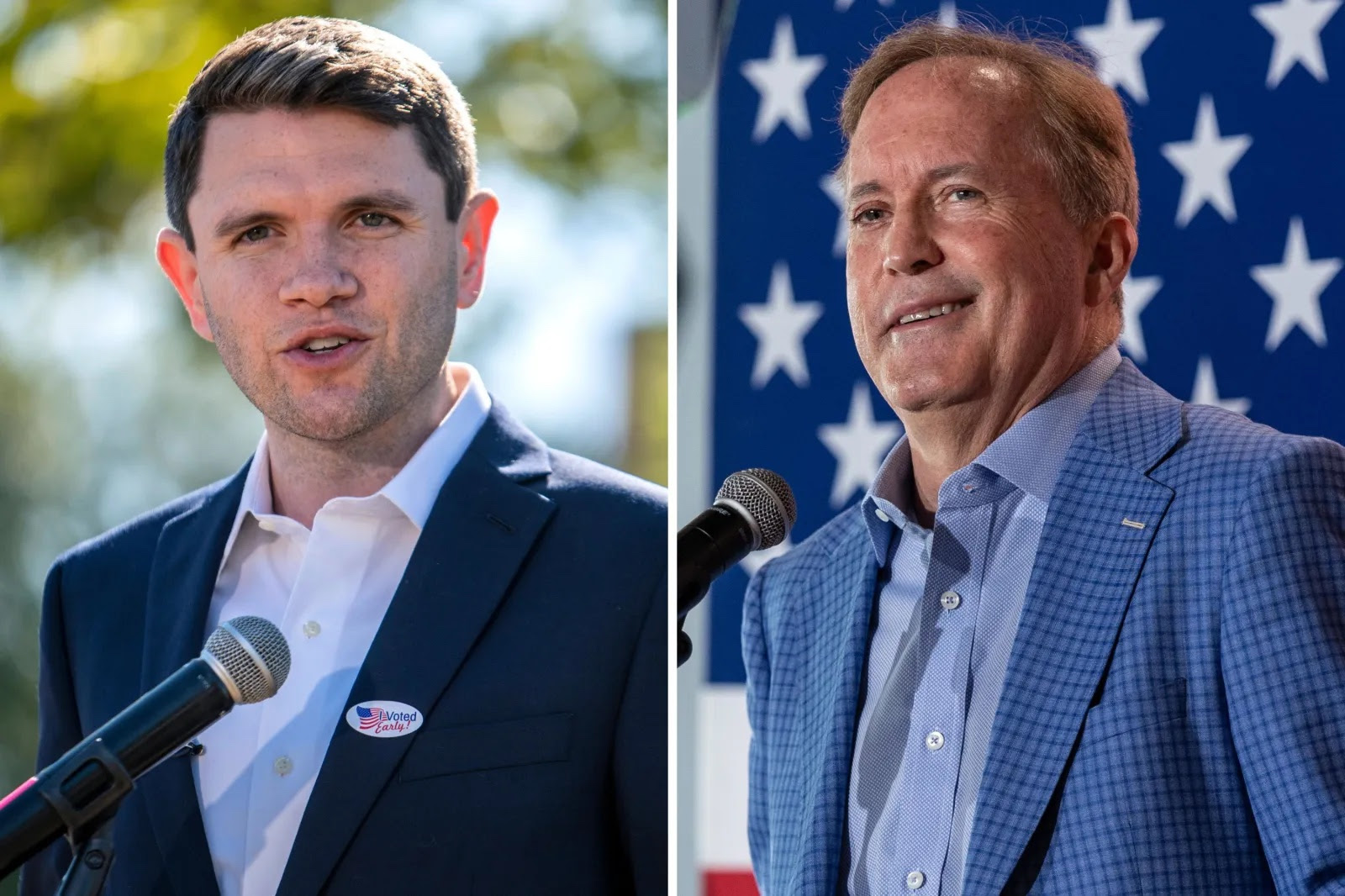
Texas Senate: James Talarico vs. Ken Paxton — The Record-Spending Race
Texas has not elected a Democrat statewide since 1994, yet recent surveys of the contest between Democrat James Talarico and Republican Attorney General Ken Paxton have shown small differences: a Fox News poll measured 49%–49%; an October Emerson survey measured 49%–48% for Talarico; and a Marist survey measured 47%–45%. Polling sources and field dates.
Talarico, a state representative and former teacher, has emphasized economic fairness and his faith. Paxton has stressed his conservative record and alignment with President Trump, while facing renewed scrutiny of previous legal controversies. The campaigns sharply disagree over taxes, immigration and Washington’s direction.
The spending is extraordinary: CBS Texas reported that AdImpact placed spending on political advertising across the primary and general-election contest at roughly $544.5 million — a record for a nonpresidential race. The central unknown is how Texas’s unusually large electorate will translate that investment and attention into votes.
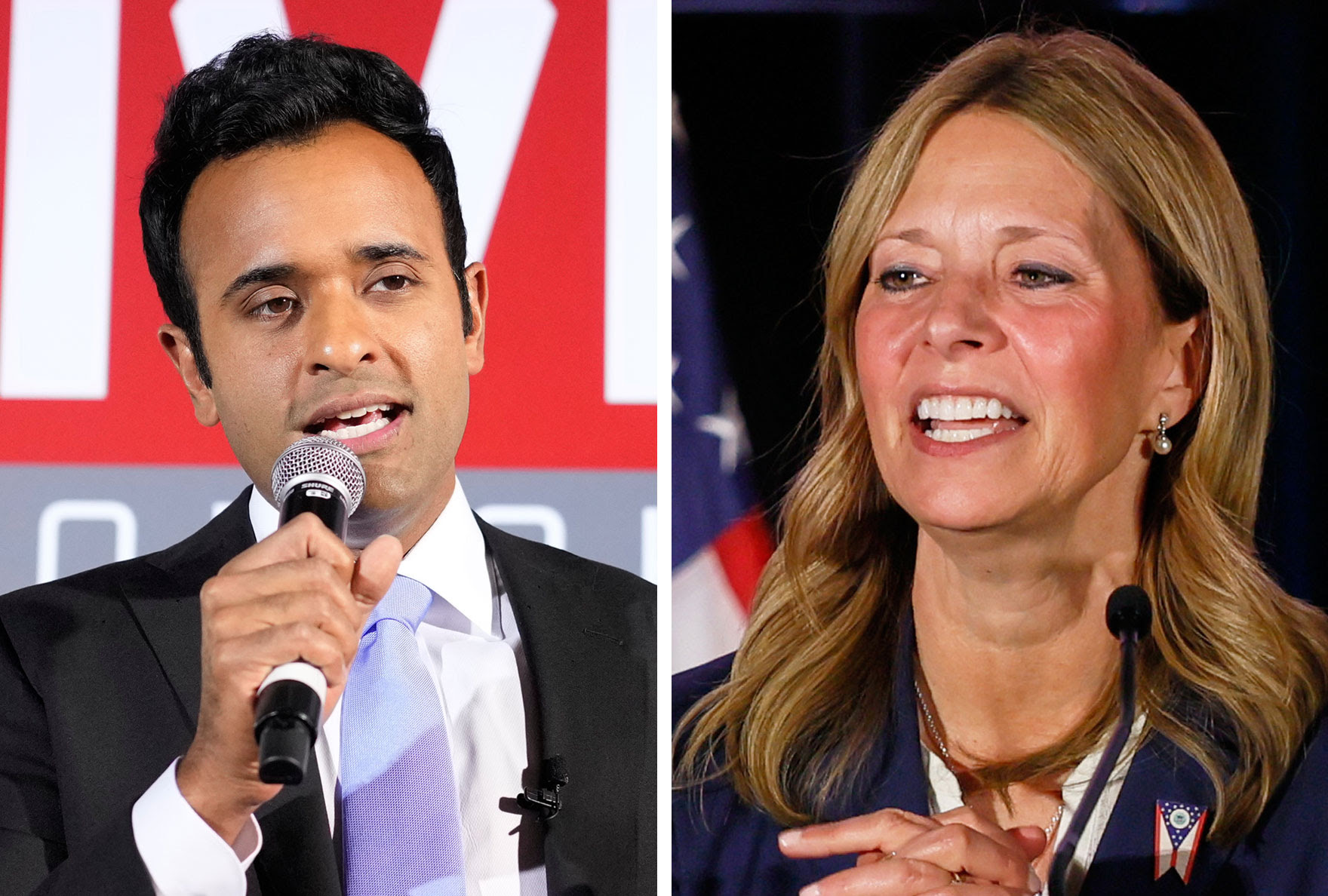
Ohio Governor: Amy Acton vs. Vivek Ramaswamy — A Late Controversy, Then a Change
An October Marist poll measured Democrat Amy Acton ahead of Republican Vivek Ramaswamy 50% to 43% among likely voters, while a Bowling Green survey showed a six-point difference. The closing weeks have been dominated in part by a Ramaswamy campaign advertisement featuring Acton’s estranged mother making personal accusations.
The ad drew criticism from figures in both parties. Ramaswamy defended it, but by October 29 the campaign said it was no longer airing after approximately $1 million in television spending, rather than the $4 million originally announced. Trump and Vice President JD Vance had defended the ad; Ohio Gov. Mike DeWine was among those urging its withdrawal.
The election will provide a clearer measure of what resonated with Ohio voters: policy differences, the state’s economic outlook, the candidates’ records, or the debate over the boundaries of campaign attacks.
ELECTION NIGHT: KEY THINGS TO WATCH
- The House: Not just control, but the size of the majority. The final nonpartisan ratings lean toward a Democratic takeover, though that is not an election result. On October 30, the Cook Political Report outlined possible Democratic gains of 12–25 seats; some House Republicans have privately discussed what minority status could look like. With dozens of competitive districts, a narrow shift and a larger national realignment would produce very different governing realities. Cook’s final-week analysis.
- The Senate: A different, more complicated battlefield. Republicans enter with a 53–47 majority. Democrats need a net gain of four seats; a 50–50 chamber would still be controlled by Republicans through Vice President JD Vance’s tie-breaking vote. Watch the arithmetic across North Carolina, Maine, Alaska, Iowa, Kansas, Ohio and Texas — and any Republican gains in Democratic-held states. Reuters’ Senate battleground guide.
- The states that tell the national story. Michigan, Texas and Ohio are important, but compare metropolitan, suburban and rural margins throughout the night. Look for whether changes are concentrated in a few candidate-specific contests or visible across multiple regions and offices. A statewide headline alone will not answer that.
- California’s congressional report card. Alongside the contests in Districts 22 and 48, watch the margins in Orange County’s 45th and the Sacramento-area 6th. California’s redrawn map has reshaped several races. The cumulative results will help explain both the House balance and the effectiveness of the new district lines.
- Los Angeles: Beware the first ballot drop. The early vote has skewed older and several West Valley communities have returned ballots quickly. Younger and more progressive voters frequently return ballots later or vote close to Election Day. If Bass and Raman are separated by a small margin Tuesday night, subsequent ballot counts could matter substantially; no one should mistake an early lead for a final result. L.A. Times on late-counted ballots.
- The Trump factor: Reaction — and the governing strategy already taking shape. If Democrats take the House, how does President Trump respond publicly, and how does he adjust governing? In a November 1 report, Reuters described White House preparations to pursue more of its agenda through executive authority and to respond to congressional investigations. Trump has publicly floated an initial period of vetoes followed by possible negotiations. The implications would reach federal spending, grants, regulation and oversight. Reuters’ November 1 report.
- Propositions 40, 41 and 42: The legal arithmetic. If multiple measures pass, compare their “yes” vote totals and watch the official analysis of any conflicting provisions. An election-night headline cannot on its own resolve the constitutional and statutory questions.
- Count timing matters. In California and other close contests, later-arriving mail ballots, provisional ballots and ordinary canvassing can change reported margins over several days. A race that remains uncalled is not, by itself, evidence of wrongdoing.
LOOKING AHEAD: THE ELECTION ENDS. THE GOVERNING BEGINS.
The election will answer who holds office. It will not answer how they intend to govern — and that distinction is especially important for the communities, businesses and institutions we work with every day.
If Congress changes hands, the implications will reach far beyond committee chairmanships. A Democratic House could launch hearings and investigations, demand agency records, and negotiate over spending; a Democratic Senate would also reshape confirmation votes. But a divided government would not simply end the president’s authority: he retains the veto and powers that may be exercised through federal agencies, subject to the law and courts. Reuters reported on November 1 that White House officials have already been examining executive options on tariffs, immigration, housing and federal spending. For local governments, nonprofits and infrastructure partners, the practical questions will be which grants, regulations and appropriations continue — and where oversight or litigation changes the timeline.
California will enter 2027 with a new governor and an unusually consequential set of ballot decisions. The implications will unfold through budgets, appointments, agency direction, regulations and the relationship between Sacramento and local government. For municipalities and nonprofits, the key question is often less about the headline than about the timeline: when guidance changes, who administers a program and when funding reaches the community.
In Los Angeles, the mayoral election will be followed immediately by decisions about assembling a leadership team, working with the Council and city departments, managing public-safety relationships, advancing housing and homelessness priorities, and preparing for major international events. A mayor’s success will depend on whether those parts of government move together rather than in separate silos.
Three tests are worth keeping in mind as the campaign gives way to governing: Will leaders set priorities clearly? Will they build coalitions capable of turning those priorities into action? And will residents, workers and businesses see measurable improvements in daily life?
For our clients, the practical work begins with listening, assessing the new landscape, building relationships early, and understanding which policy and funding decisions will affect projects on the ground. Elections reset the political environment. They do not replace the ongoing work of delivering results.
We will be tracking those transitions closely and will share what the results mean for California, Washington and the communities we serve in our next edition.
If you have not voted, check your local election office for the options available in tomorrow’s election. Thank you for being part of the Daley Strategies community. We value your friendship, your partnership, and your interest in the issues shaping California and the country.
Here’s to doing meaningful work — and making a meaningful difference.
The Daley Strategies Team
The Daley Brief
Get the next one in your inbox.
Occasional updates on public affairs in Southern California, client wins, and firm news. No noise.
Subscribe